
Species guide · Updated September 27, 2026
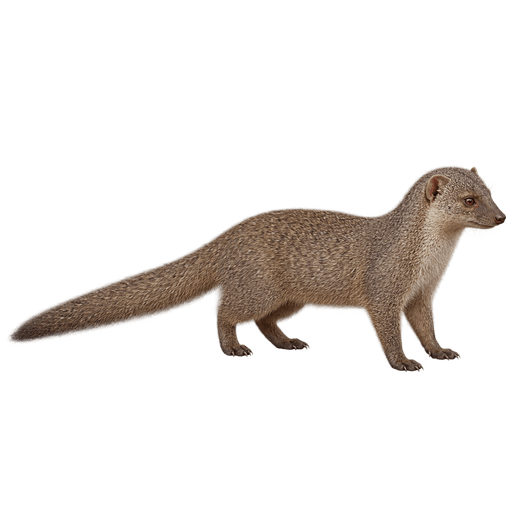
Mongoose in Hawaiʻi
Urva auropunctata
Mongoose were brought to Hawaiʻi in 1883 by the sugar industry to control rats. They are active by day and eat the eggs and hatchlings of native ground-nesting birds. They are widespread on Hawaiʻi Island, Oʻahu, Maui and Molokaʻi. Kauaʻi and Lānaʻi have no known population, so a sighting there matters.
What to report
- A live mongoose, with the time of day and what it was doing.
- A dead mongoose on a road or trail (report it as roadkill and name the species).
- A photo whenever you can: the long body, short legs and pointed nose settle most doubts.
Not this
- A rat: rats have a bare, scaly tail and are mostly active at night.
- A cat: larger, with a rounder face and a tail held up.
A report is one observation at one place and time. It is not a count of animals and not an estimate of how many live there.
Who to call
Who to contact
FeralMap does not send your report to any agency. If a situation needs a response, contact them yourself using the details here.
- 643-PEST, the statewide pest hotline · 808-643-7378Plants and animals seen where they have not been seen before: a mongoose on Kauaʻi or Lānaʻi, a deer on Hawaiʻi Island. It is not the place for established animals such as feral cats, pigs, goats or chickens.
Links last reviewed 2026-09-27. A wrong link or a missing contact: contact@nene.org.
What to do on each island
Mongoose are widespread here, and the state says it is not necessary to report them to 643-PEST. Report sightings on the map.
| Island | What to do |
|---|---|
| Hawaiʻi Island | Mongoose are widespread here, and the state says it is not necessary to report them to 643-PEST. Report sightings on the map. |
| Maui | Mongoose are widespread here, and the state says it is not necessary to report them to 643-PEST. Report sightings on the map. |
| Oʻahu | Mongoose are widespread here, and the state says it is not necessary to report them to 643-PEST. Report sightings on the map. |
| Kauaʻi | ContactKauaʻi has no established mongoose. Report a suspected sighting to KISC or 643-PEST the same day, with the exact spot, the time and a photo if you safely can. Then add it to the map.Kauaʻi Invasive Species Committee (KISC) · 643-PEST, the statewide pest hotline |
| Molokaʻi | Mongoose are widespread here, and the state says it is not necessary to report them to 643-PEST. Report sightings on the map. |
| Lānaʻi | ContactLānaʻi has no known mongoose population. Call 643-PEST the same day with the exact spot and time, then add it to the map.643-PEST, the statewide pest hotline |
Reports of mongoose on the map
Public mongoose reports, all time
Open the full map · Select a cell to see its reports. Locations are generalized cells, never exact points.
Common questions
- I saw one on Kauaʻi. Is that possible?
- Yes. Kauaʻi has no established population, but the state reports five live mongoose captured there since response efforts were strengthened in 2012. Call first, then add it to the map.
- Why map mongoose on islands where they are everywhere?
- Repeat reports show where people see them near nesting birds and wetlands. A report is one observation, not a count of animals.
Sources
Read the project overview, the privacy policy, or download the public dataset.